Practicing in Des Moines
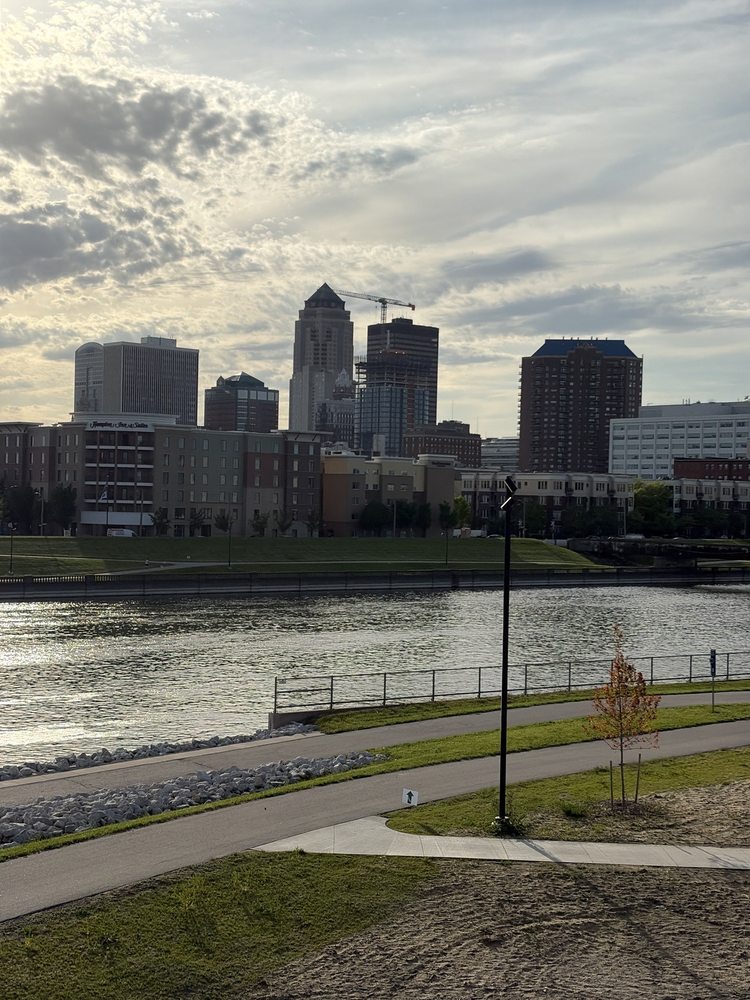
Des Moines pairs two large competing health systems with a strong county safety-net hospital and a growing osteopathic medical school, all at a cost of living and a tax picture that stay well below the coastal markets. Whether you are still exploring cities, mid-application, prepping for a site visit, or weighing an offer, this guide is here to give you the full picture with no pressure and no guesswork, wherever you are in the process.
Health systems you may be working alongside
- UnityPoint Health. A major presence in central Iowa, with Iowa Methodist Medical Center and Blank Children's Hospital on its downtown campus, plus Iowa Lutheran and Methodist West, anchoring much of the metro's acute and pediatric care.
- MercyOne Des Moines. A large Catholic system with its medical center near downtown and a West Des Moines campus, part of the Trinity Health national network.
- Broadlawns Medical Center. The Polk County safety-net hospital, providing care across the metro regardless of ability to pay, with a growing behavioral health focus.
- VA Central Iowa Health Care System. The Veterans Affairs hospital serving veterans across central Iowa from its Des Moines campus.
- Academic and training pipeline. Des Moines University, an osteopathic medical and health sciences university, trains physicians and other providers, and the systems host residencies and fellowships that supply the region's graduate medical education.
What is being built right now
- Des Moines University relocated from its old Des Moines site to a new 88-acre campus in West Des Moines, a modern medical and health sciences campus that opened in recent years and consolidated its programs under one roof.
- UnityPoint Health, through its Eyerly Ball behavioral health arm, is consolidating mental and behavioral health services in Des Moines into a dedicated facility near Iowa Lutheran Hospital.
- The Des Moines systems continue to invest in advanced surgical technology, including robotic surgery platforms at their Iowa Methodist and MercyOne campuses.
- Outpatient surgery centers, clinics, and specialty care continue to expand across the fast-growing western suburbs of West Des Moines, Waukee, and Ankeny.
Where physicians are landing
Physicians and APPs tend to cluster where the commute to the downtown hospital campuses stays short and the setting fits their schedule. A mix of in-town and suburban areas comes up often:
- Beaverdale. Established northwest-side neighborhood known for its brick Tudor homes and walkable commercial pockets, close to the Methodist campus.
- South of Grand. In-town area of larger historic homes on tree-lined streets, a short reach to downtown and the hospitals.
- Sherman Hill. Historic district just west of downtown with Victorian homes and an urban feel near the medical corridor.
- West Des Moines. Large suburb with newer subdivisions, a growing employment base, and public schools that post high ratings.
- Clive and Waukee. Fast-growing western suburbs with newer housing, larger lots, and trail access along the Raccoon River corridor.
- Johnston and Urbandale. Northwest suburbs with established and newer subdivisions and quick access to the interstates.
- Ankeny. Fast-growing suburb north of the city with newer construction and a developing town center.
Commute to the medical district
The downtown hospital campuses, including Iowa Methodist and Blank Children's, are reached mainly by I-235, which runs through the heart of the metro, with the I-35 and I-80 loop carrying suburban traffic. In-town neighborhoods such as Beaverdale and South of Grand typically run 5 to 15 minutes, West Des Moines and Clive run 15 to 25 minutes, and Waukee, Ankeny, and Johnston run 20 to 35 minutes depending on the corridor. Des Moines commutes are generally light compared with larger metros.
Cost of living and taxes
- Housing. The typical metro home value is in the high $200,000s, with many physician-oriented areas running from roughly $300,000 into the $600,000s in the newer western suburbs. Average rent is roughly $1,100 to $1,400 depending on area and size.
- State income tax. Iowa has moved to a flat state income tax, around 3.8 to 3.9 percent, having phased out its older graduated brackets.
- Sales and property tax. The combined sales tax in Des Moines is around 7 percent, with the state rate plus a local option. Property taxes in Iowa tend to run on the higher side, so effective rates on primary residences are worth factoring into your budget.
Rent or buy
Many physicians rent first to learn the area and confirm which corridor keeps the commute workable, then buy once they are settled and sure of the hospital and schedule. We can connect you with physician-friendly lenders and vetted local agents and compare both paths against your start date, so the timing lines up with licensing and credentialing rather than working against it. Please confirm current figures with a tax professional.
Your move, handled
Changing jobs as a physician is tied to your contract, your start date, licensing, and credentialing. Here is what your Physician Relocation Advisor coordinates on a Des Moines move:
- Iowa licensure. Guidance on the Iowa Board of Medicine application and timeline, plus your DEA registration for the new address.
- Credentialing. Support through hospital and payer credentialing, which commonly runs 90 to 180 days, so it lines up with your start date.
- Housing around your hospital. Homes matched to your commute and schedule, with vetted local agents and physician-friendly lenders.
- Family and schools. Research on neighborhoods and school options so your family has what it needs.
- One point of contact. We stay with you from offer to move-in, no pressure and no guesswork.
We're here to take care of you.